Financial Literacy Month: 5 Best Money Books to Improve Your Financial Confidence
Many of us were never taught how to manage money, yet we make financial decisions every day that impact our future. April is Financial Literacy Month—a reminder that improving your financial literacy and building financial confidence are lifelong skills.
Research shows that about 4 in 10 Americans don't read a single book each year. That’s one reason Financial Literacy Month is such an important reminder that learning about money is a lifelong process.
One of the simplest and most affordable ways to learn about personal finance is by reading money books that teach saving, investing, and debt management.
Financial confidence often starts with learning and being exposed to new ideas or teachings. You don’t need to take expensive classes or pay huge amounts of money, instead books are one of the simplest and most affordable ways to expand your knowledge.
Over the years - both in my own financial journey and through my work as a financial coach - these five books stand out as powerful resources for building financial confidence.
Why Reading Personal Finance Books Improves Financial Literacy
Reading is not only an opportunity to read about places you may never travel too or provide you awareness to heal your body. It’s also a wonderful option to expand your knowledge about saving, investing, and debt management.
By reading financial books, it could help you reshape any limiting beliefs you have about money. It could also (with time) build your financial confidence.
Reading typically gives you the chance to learn from experts using real-life examples. It also encourages long-term thinking rather than short-term reactions which are often what you might hear from the news or social media.
Financial literacy isn’t about knowing everything - it’s about continual learning.
What are the best money books to read?
Here are five of the best money books to improve your financial confidence:
The Psychology of Money
Rich Dad Poor Dad
The Millionaire Next Door
The Total Money Makeover
The Simple Path to Wealth
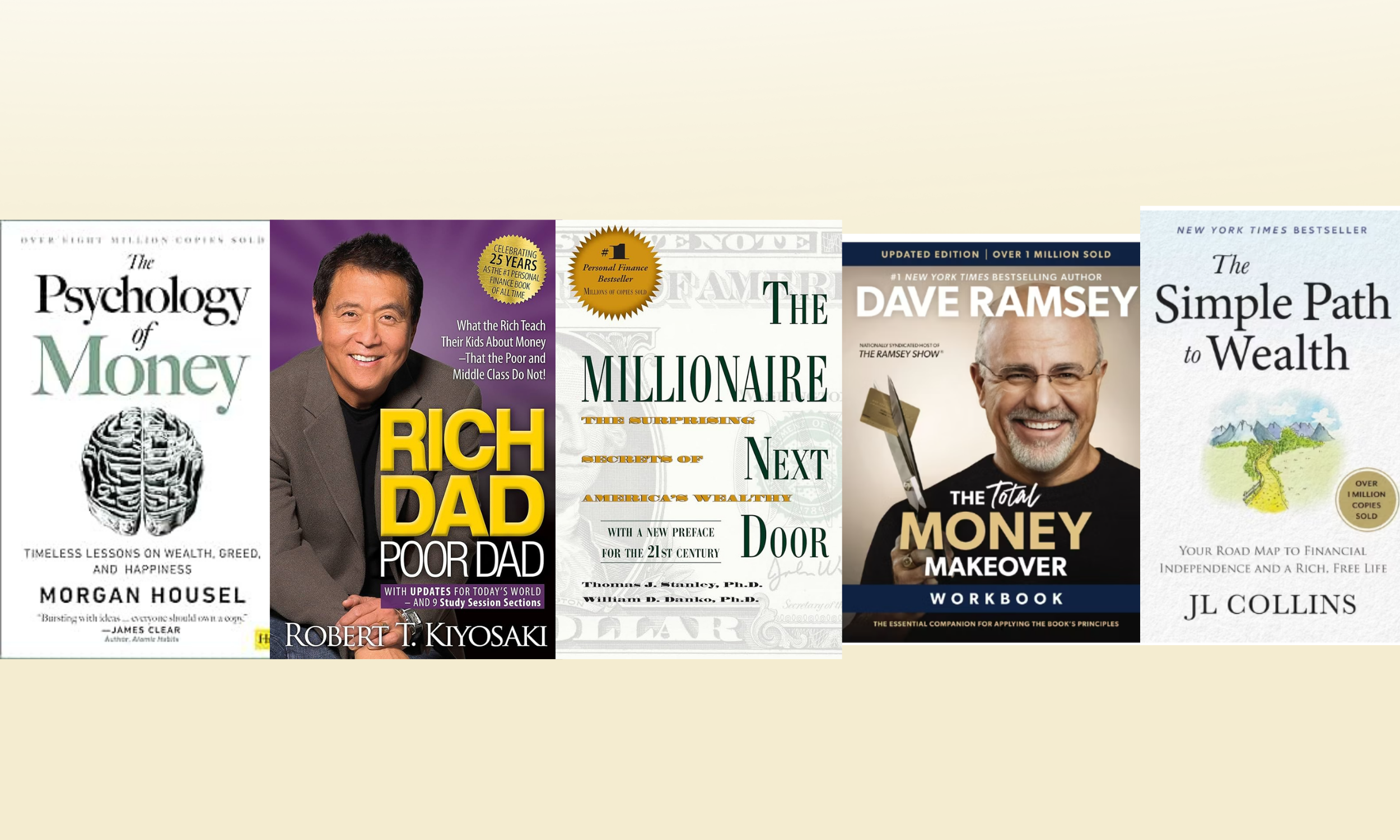
1️⃣ The Psychology of Money by Morgan Housel. This popular money book focuses on your money mindsets. Understanding your mindset about money is the foundation for every financial decision you will typically make. And he does a good job explaining how those decisions are often emotional rather than mathematical.
He explains that behavior matters more than intelligence when building wealth. Patience and long-term thinking are keys to the messaging he shares.
2️⃣ Rich Dad Poor Dad by Robert Kiyosaki. This book is centered around financial education and building assets. He explains the differences between your assets and liabilities. The importance of financial education and how it matters as well as thinking differently about your income and wealth. Learning how money works can change the trajectory of your financial life.
3️⃣ The Millionaire Next Door by Thomas Stanley & William Danko. This book defines the habits of wealthy individuals and how wealth is more often built through consistent habits than flashy lifestyles. Explained in their book they talk about how most millionaires live below their means and that financial discipline matters more than appearances. They provide details around wealth being often built quietly through consistent habits.
4️⃣ The Total Money Makeover by Dave Ramsey. This book is written by a well-known radio host and financial coach who is all about getting out of debt and staying out of debt so you can live generously. He lays out his clear plan and how it has consistently helped people break the cycle of debt. He has a structured plan (7 baby steps) for paying off debt, the importance of emergency savings and improving your behavioral discipline around your spending.
5️⃣ The Simple Path to Wealth by JL Collins. This book has a theme about investing and your financial independence. He describes how investing doesn’t have to be complicated to be effective and shares his simplistic methods in investing. The author defines his long-term investing mindset and the importance of low-cost index funds.
How to Start Your Financial Literacy Journey Today
Now that I have shared some of the top-rated personal finance books, what should you do next?
Choose one book from the list to get started - and remember your local library often has these well-known personal finance classics available for check-out. And if you’re lucky perhaps they even have them available in audio format to download for easier reading.
Commit to Read 10! Either reading 10 pages a day or 10-minutes a day, we so often think we can’t find time to read but you may be surprised how quickly you can get through one book when you break it down into tiny pieces.
Apply one concept at a time. As you are reading you will find some great nuggets and be excited for the changes coming your way. I encourage you to adopt and try what you’re learning, but it’s important to apply one concept at a time so you aren’t overwhelming yourself as well as providing a sustainable change to your financial future.
Spread the word. Discuss what you’re learning with a partner or friend, perhaps even encourage others how much you are enjoying getting in this quiet time while also expanding your knowledge.
National Financial Literacy Month is observed every April in the United States to raise awareness of the need for financial education and smart money management habits. Initiated to promote youth financial literacy, it now focuses on helping all consumers improve budgeting, saving, and investing skills to achieve financial stability.
By taking small steps in reading and learning you can lead to big changes over time. I truly believe books can open the door to new money possibilities and eventual financial prosperity.
If you're a visual person like me, perhaps having a daily reminder to track your reading would be helpful? Download my READ10 printable today.
If you're ready to turn your financial knowledge into a clear plan, financial coaching can help you take the next step. Schedule your FREE 45-minute retirement clarity call and start building your financial confidence today.
If you have enjoyed this article, follow me on social media @lordfinancialcoaching.