Discover four ways to design your cash flow, live below your means, and make intentional financial decisions that support your long-term goals.
KEY TAKEAWAYS
Financial freedom starts with understanding your cash flow. Knowing what comes in, what goes out, and what remains helps you make informed decisions about your money.
Living below your means is about intentional spending, not deprivation. Aligning purchases with your personal values creates room for the experiences you enjoy and the financial goals you want to achieve.
Your freedom gap can help build financial independence. A flexible monthly spending plan can help you direct available money toward savings, debt reduction, retirement, and future opportunities.
Are you directing your money—or just reacting to where it goes?
Have you ever thought, “If I could just earn over $100,000 a year, I'd be financially set!”
It's a common belief. But earning a good income doesn't automatically create financial freedom.
You can earn a six-figure salary and still struggle to save, manage expenses, or make progress toward retirement.
Financial freedom doesn't happen by accident. It begins when you intentionally decide what you want your money to accomplish.
Learning how to manage your cash flow and live below your means can help you make those decisions with greater confidence.
And living below your means doesn't mean eliminating everything you enjoy. It's about designing your cash flow to support your lifestyle today while creating opportunities for tomorrow.
In this article, I'll share four practical concepts to help you manage your cash flow, spend intentionally, and build toward financial independence.
These four cash flow management strategies can help you move from simply tracking expenses to intentionally directing your money toward financial freedom.
Concept 1: Understand Your Monthly Cash Flow
Understanding your cash flow and plans for every dollar is key to ensure your money is supporting your long-term financial plans.
So, let’s start to understand your cash flow with three questions:
How much money comes into your household each month?
How much goes out for essential and discretionary expenses?
How much remains after your spending?
Understanding your income is the first step, but managing cash flow means understanding both the amount and timing of money moving into and out of your accounts.
For example, your monthly income might comfortably cover your expenses, but if several large bills are due before your next paycheck arrives, you could still experience a temporary cash shortage.
That's why it's important to understand not only how much you earn and spend, but also when those transactions occur.
If you've never reviewed your cash flow, start by examining the last 30–90 days of bank and credit card transactions. Most financial institutions allow you to download or export this information.
You can't intentionally direct money you don't understand.
Concept 2: Live Below Your Means With Intentional Spending
As individuals we often get so busy with living that we lose sight of our spending habits. So today could be the day that you decide. I want to revisit how my income is being used.
I encourage you when you're performing this analysis to consider a mindset shift of living below your means.
Living below your means is not meant to be a large sacrifice.
Instead, it’s ensuring your spending is aligned with your personal values and financial goals.
You really must revisit all your wants and needs and confirm that you are setting aside the savings you truly want and are using what’s leftover properly.
Consider your largest spending commitments. Does your housing expense reflect your priorities? Is upgrading your vehicle more important than increasing your retirement savings? Are frequent dinners out bringing you enough enjoyment to justify their cost? There's no universal right answer, but these are the types of decisions worth revisiting.
Really evaluate the funds you are allocating to your needs and confirm if those amounts are what is most important. And that’s assuming you are setting aside the savings or contributions you really need for a successful retirement.
What’s left, is what could be allocated towards your wants.
As part of my own financial journey, I prioritized travel and meaningful experiences over maintaining a larger, more expensive home. Only you can decide your wants and needs but it’s critical you evaluate them occasionally to ensure alignment. Otherwise, I’ve found that years go by and you may be missing the mark on achieving your goals because you spend in the moment.
Some reflection questions to consider if you have never tackled an exercise like this before:
Does this purchase support what matters most to me?
Am I buying it because I value it or simply because I can afford it?
What future opportunity might I be choosing instead?
Living below your means is not meant to be depriving yourself. Instead, it's about making thoughtful trade-offs.
Concept 3: Create a Monthly Spending Plan That Works
A monthly spending plan helps organize:
✔️ Reliable income and essential expenses
✔️ Lifestyle spending and personal priorities
✔️ Savings, debt repayment, and long-term financial goals
✔️ Irregular expenses such as insurance, travel, holidays, and home maintenance
A spending plan is at the core meant to be flexible and should be reviewed monthly. This allows you to revisit how the previous month went and provide time to adjust for the next month or the rest of the year.
Ready to put your financial priorities into action?
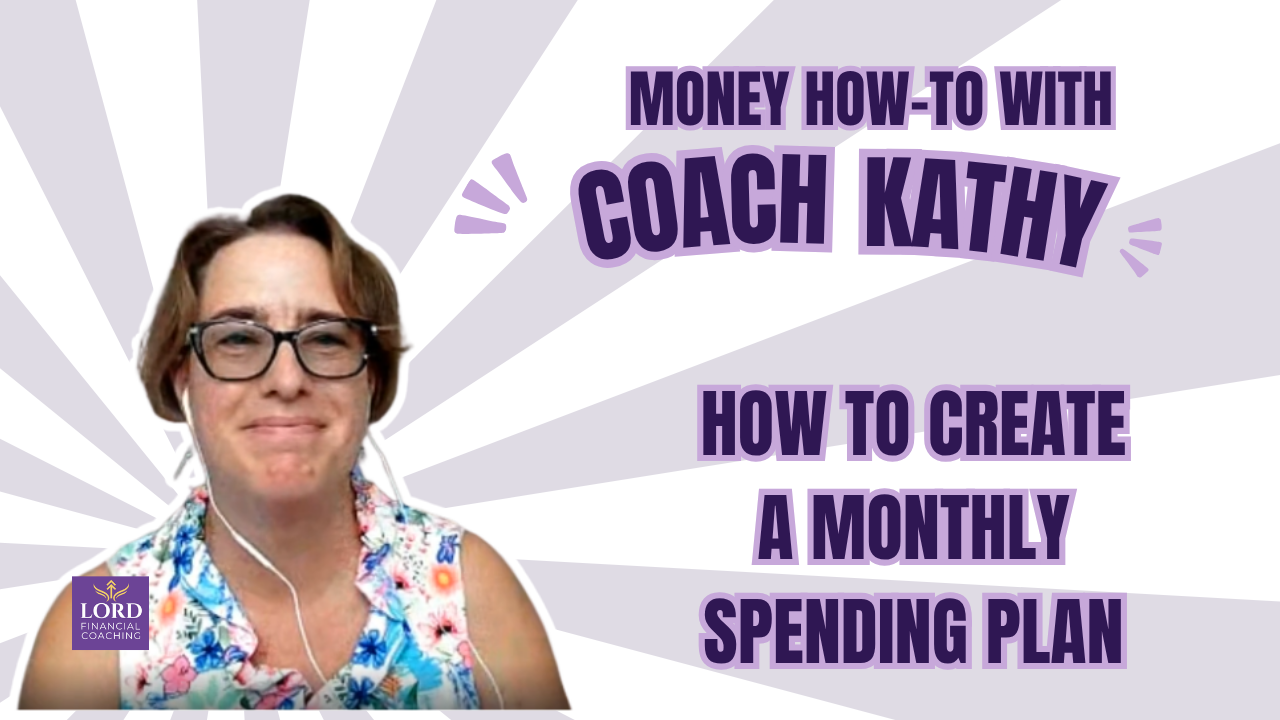
In my Money How-To with Coach Kathy video, “How to Create a Monthly Spending Plan”, I walk you through how to use a simple spreadsheet to organize your income, plan expenses, and align your spending with your financial goals.
Watch: How to Create a Monthly Spending Plan | Money How-To with Coach Kathy
Download Your FREE Annual Spending Plan Tracker Excel Spreadsheet
Remember, your spending plan doesn't need to be complicated or perfect. It needs to work for your lifestyle and give you the flexibility to adjust as your circumstances change.
If you need additional clarity, read about the five steps to create a monthly spending plan in my other blog: What If a Budget Could Give You More Freedom, Not Less?
Concept 4: Build Your Freedom Gap for Financial Independence
As you define your wants perhaps there is money left over after processing your expenses.
This is your Freedom Gap. The portion of your income you can intentionally direct toward financial goals.
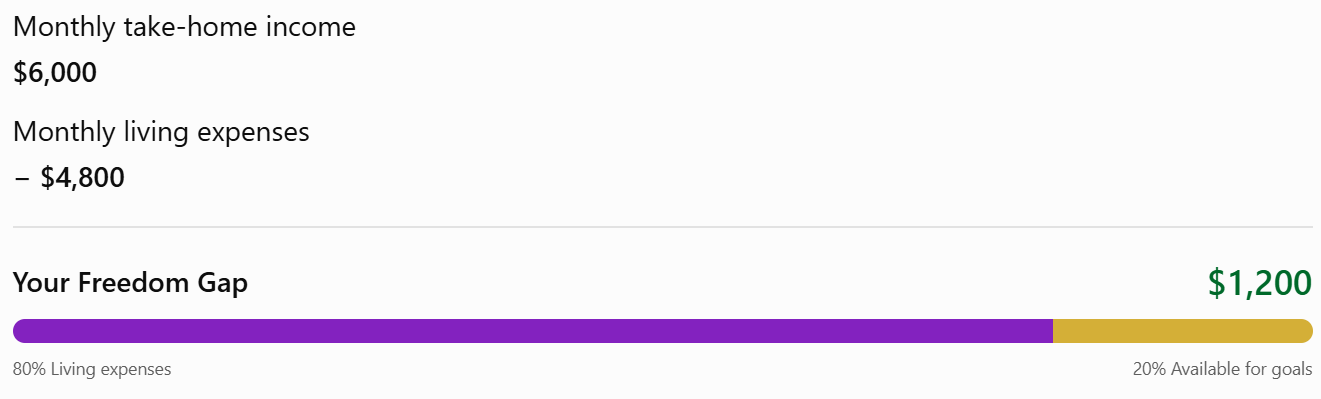
An Illustrative Monthly example for understanding your Freedom Gap
Image Title: Understanding Your Freedom Gap an Illustrative Monthly example
Your Freedom Gap doesn't have to be $1,200 to make a difference. Even finding an additional $50 or $100 per month can help you begin building savings or reducing debt. The goal is to create a sustainable gap that supports your personal financial priorities.
The Freedom Gap is your available cash flow before allocating that money toward additional savings, investments, or accelerated debt repayment.
Not everyone starts with a positive gap. Sometimes the first goal is simply to break even, reduce debt, or find a manageable adjustment.
So don’t feel crushed if once you start looking at these numbers you start realizing you are overspending your income or don’t have any wiggle room towards a freedom gap.
Not everyone has the same income, so adjust where you can and take action to organize and perhaps create a small gap over time.
The difference between what you earn and what you spend can become a source of future financial choices.
How to Start Building Financial Independence Today
It has been my experience that financial independence does not happen automatically.
Instead, it begins when you start making intentional choices about your future and truly get your cash flow organized.
This week, take 20 minutes to look at your cash flow. Identify one expense you could adjust and one financial goal you want to move closer to. Then make one intentional change.
Living below your means isn't about having less. It's about making room for more of what matters.
Frequently Asked Questions About Managing Cash Flow
Q. What does it mean to live below your means?
A. Living below your means is spending less than you earn and intentionally directing the difference toward financial goals such as savings, debt repayment, and retirement. It doesn't require eliminating everything you enjoy.
Q. How can I improve my monthly cash flow?
A. Start by reviewing your income and expenses, identifying spending that doesn't align with your priorities, and creating a flexible monthly spending plan. Even small adjustments can help create more room for your financial goals.
Q. How does managing cash flow support financial independence?
A. Managing your cash flow helps you understand how much money is available for savings, investing, and debt reduction. Over time, consistently directing money toward these goals can strengthen your financial flexibility and create more choices about your future.
If you are looking for more assistance, I encourage you to look at my additional free resources on my website, specifically I am a big believer of displaying your financial goals so that you can see them consistently. Check out my SMART Goal Vision Board, it is a vision board printable to list a goal you're working towards and what action steps you plan to take including your financial values.
Or if you're ready to turn your knowledge into a clear financial plan, coaching can help you take the next step. Schedule your FREE 45-minute retirement clarity call and start building your financial confidence today.
And if you have enjoyed this article, follow me on social media @lordfinancialcoaching.